Piglet Plush Doll ITH
First Impressions: Sweet, Stitch-Ready, and Surprisingly Versatile
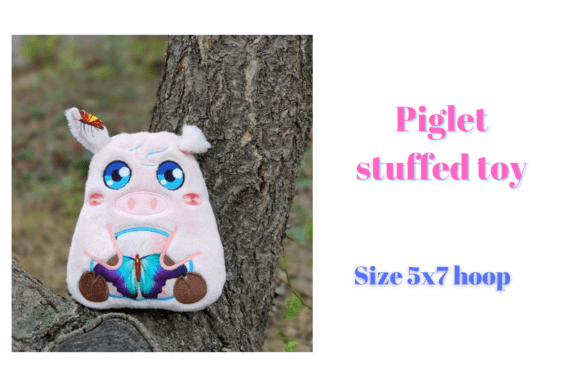
Opening the Piglet Plush Doll ITH files, I didn’t just see another farm animal embroidery design—I saw a complete handmade product waiting to be born. There’s an immediate warmth to it: round cheeks, soft ears, gentle posture, and that signature Piglet charm—neither too cartoonish nor overly realistic, but perfectly balanced for embroidery. The layout is thoughtful: compact enough for small hoops, yet detailed enough to read clearly at 4–5 inches tall. As a designer who’s stitched hundreds of animal motifs, I appreciate how the clothes are built entirely in-the-hoop (ITH). That means no separate appliqué steps, no fussy alignment—just one cohesive, layered build. It feels like a finished product in file form, not just a motif.
Where This Design Truly Shines in Real Projects
I recently used Piglet Plush Doll ITH to create custom nursery pillow covers for a client’s baby shower order—and it performed beautifully. The plush doll shape translated cleanly onto medium-weight cotton twill with tear-away stabilizer underneath and light cutaway on the back. No puckering, no thread breaks, and the satin-stitched edges held their shape even after gentle washing. That same design later became a set of embroidered patches for a local boutique’s spring collection. Customers loved how the Piglet stood out—not too busy, not too sparse—just right for stitching onto denim aprons, canvas tote bags, and organic cotton sweatshirts.
It also works quietly well for personalized gifts: stitch it onto a onesie collar as a subtle baby embroidery accent, or scale it slightly for a tea towel monogram corner. Because it’s fully ITH with integrated clothing, it reads as intentional—not an add-on, but part of the object’s identity. For Etsy sellers and craft fair vendors, that translates directly into perceived value. Buyers don’t just see “a pig”—they see a character, a story, a ready-made handmade product they can list with confidence.
Use With Care: Fabric, Fit, and Functionality Notes
This isn’t a design that forgives every surface. On stretchy fabrics like jersey or ribbed knit, I recommend basting or using a light iron-on stabilizer before hooping—otherwise, the fine satin-stitched curves around the ears and snout can distort. Thin fabrics like voile or lightweight linen need extra backing; dense fill stitches in the body can telegraph through if stabilizer is skipped. Dark fabric? Test thread colors first—the included color sequence assumes contrast, but white thread on navy can look chalky without a slight tint adjustment.
Caps and curved surfaces require caution. While Piglet Plush Doll ITH fits comfortably in a 4×4 hoop, the rounded crown of a baseball cap compresses the top half of the design during stitching. I’d suggest reducing height by 10% or opting for a flatter version (if available) for headwear. Also, avoid placing it near seam allowances or hems where bulk builds up—especially on double-layered items like blanket corners or reversible pillow covers.
What Makes Piglet Plush Doll ITH Stand Out Commercially
In my work with small shop owners and digital product sellers, I’ve watched how certain embroidery files become repeat bestsellers—not because they’re flashy, but because they’re reliable. Piglet Plush Doll ITH earns that trust. Its clean lines reproduce well in printable mockups, its proportions hold up across fabric types, and its farm animal theme bridges nostalgia and modern minimalism. For apparel decorators, it adds personality without overwhelming a garment. For craft business owners, it’s a low-risk, high-recognition asset: instantly recognizable as Piglet, yet distinct enough from licensed versions to feel original and ownable.
And yes—it supports commercial embroidery use *if* your license permits it. Always verify that before listing finished items on Etsy or bundling it into a digital embroidery bundle. Don’t assume “multiple embroidery file format” includes commercial rights—check the terms.
Practical Designer Notes You’ll Actually Use
- Always test on scrap fabric first—especially with textured weaves or blends. What looks smooth on screen may snag on slubs or pile.
- Review stitch density before stitching on delicate items. High-density areas (like the bow or cuffs) benefit from reduced tension or slower speed on older machines.
- Confirm hoop size compatibility. While designed for standard hoops, some variations may push limits on compact machines—measure before committing.
- Inspect small details at 200% zoom in your embroidery software: tiny eyes, stitching lines on clothes, and seam overlaps should all resolve cleanly.
- Test black-and-white mockups to assess silhouette strength. Piglet Plush Doll ITH holds up well here—its shape reads even without color cues.
- Compare light vs. dark backgrounds visually. Some thread combos fade on black; others glare on ivory. Adjust accordingly.
- Use proper stabilizer: medium tear-away for stable wovens, cutaway for knits, and water-soluble film for towels or napkins where backing must disappear.
- Check dual-use readiness: does the design work equally well for personal keepsakes *and* client projects? Piglet Plush Doll ITH does—its tone is warm, not cutesy; detailed, not fussy.
A Final Thought for Makers Who Value Substance Over Sparkle
Not every embroidery file earns a permanent spot in my working library. Piglet Plush Doll ITH did—because it solves real problems: it simplifies ITH construction, delivers consistent results across common substrates, and carries emotional weight without leaning on gimmicks. Whether you’re stitching a holiday embroidery gift for a toddler, building a line of boutique nursery decor, or creating digital embroidery assets for fellow designers, this machine embroidery design doesn’t shout—it invites. And in a crowded market of craft business offerings, that quiet confidence is exactly what makes Piglet Plush Doll ITH worth your time, thread, and trust.