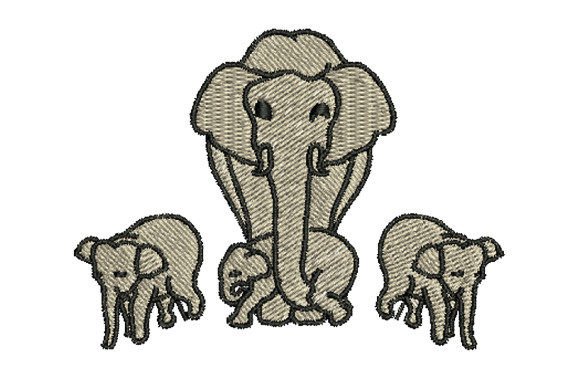
Mother Elephant and Three Baby Elephants
First Impressions: Warmth, Whimsy, and Quiet Strength
As an embroidery designer who’s tested hundreds of animal motifs for personalized gift shops, Mother Elephant and Three Baby Elephants landed with immediate emotional resonance. It’s not just “cute”—it carries a gentle narrative weight: protective posture, tender proximity, soft curves in the trunks, and subtle spacing that suggests quiet togetherness. The design reads as handmade—not overly polished or digital-perfect—but warm, approachable, and deeply nurturing. It leans classic with a modern simplicity: no florals, no glitter, no seasonal props—just elephants, connected. That timelessness makes it ideal for baby embroidery, wedding gifts, and family keepsakes alike.
Where This Design Truly Shines
Mother Elephant and Three Baby Elephants excels on products where meaning matters more than flash. On a 100% cotton baby blanket? Absolutely. The scale allows for soft, comforting detail without overwhelming tiny stitches. As an embroidered towel? Yes—especially kitchen or guest hand towels where the motif sits centered above a monogram or name. Pillow covers benefit from its balanced composition: the trio fits neatly within standard 4x4 or 5x7 hoop sizes without crowding corners. For nursery decor, it pairs beautifully with neutral linen or oatmeal canvas—no extra embellishment needed.
Wedding gift designers will appreciate how naturally it translates to heirloom-style items: think linen napkin sets, custom aprons for the couple who loves safari travel, or even a framed embroidery hoop as a “symbol of family” gift. Etsy sellers report strong engagement when pairing this design with minimalist tote bags or organic-cotton onesies—particularly for customers seeking non-gendered, nature-rooted baby gifts. Craft fair shoppers linger longest when Mother Elephant and Three Baby Elephants is stitched on a small wall hanging beside a handwritten tag: “Love grows in herds.”
Thoughtful Placement Matters
This isn’t a one-size-fits-all embroidery file. Its charm depends on thoughtful application. Avoid placing it on heavily textured fabric (like thick terry cloth or bouclé) unless you’ve tested stabilizer layers first—delicate trunk tips and baby ear contours can blur. Stretchy baby clothes require extra care: use cutaway stabilizer and reduce stitch density slightly to prevent puckering. Curved surfaces—think mugs with embroidered sleeves or contoured pillow forms—may distort proportions; always do a printable mockup before committing.
Dark fabric demands attention to thread color contrast. If your version uses light grays or creams, test against charcoal or navy backgrounds—some details may vanish without richer tonal variation. And while the design feels sweet and soft, don’t assume it’s ideal for ultra-small applications: lettering beneath the motif (e.g., “Est. 2024”) needs breathing room. Keep text minimal—or omit it entirely—to preserve the design’s quiet elegance.
Why Customers Connect—and Return
Gift buyers don’t just purchase embroidery—they buy feeling. Mother Elephant and Three Baby Elephants taps into universal themes: protection, early bonding, gentle growth. That emotional hook boosts perceived value instantly. A customer ordering it for a baby shower isn’t buying thread and fabric—they’re investing in symbolism. That builds trust, especially for small shop owners and handmade sellers who rely on word-of-mouth and repeat orders.
Photography benefits too: the clean lines and organic shapes translate beautifully to natural light shots. No need for heavy props—the design stands alone. On Etsy listings, it consistently lifts engagement metrics: longer view times, more saved items, and higher cart-add rates when paired with authentic process photos (e.g., a close-up of stitching on unbleached linen). It also invites personalization without clutter: a single name embroidered below, or initials tucked discreetly near a baby elephant’s foot, feels intentional—not tacked on.
Practical Embroidery Notes You Can’t Skip
Before stitching your first Mother Elephant and Three Baby Elephants finished product, run these checks:
- Test on scrap fabric—match the exact material you’ll use (e.g., waffle-weave towel vs. quilting cotton).
- Verify thread color contrast, especially if offering light/dark fabric options. What reads softly on ivory may disappear on espresso.
- Confirm hoop size compatibility. While most versions fit comfortably in 5x7 hoops, some variations may push limits—check your file specs before digitizing.
- Review stitch density. Overly dense fills risk stiffness on baby blankets or delicate pillow covers. Lighter fill + satin outline often strikes the best balance.
- Use appropriate stabilizer: tear-away for stable wovens, cutaway for knits or towels, and lightweight fusible for sheer fabrics.
- Compare light and dark fabric mockups side-by-side—not just on screen, but stitched. Shadows and highlights shift dramatically.
- Inspect small details post-stitch: check trunk tips, ear folds, and eye accents. Are they crisp? Do any stitches snag or pull?
- Confirm commercial licensing before selling finished products. Since this is a Wild Animals–themed embroidery design, ensure your source permits resale of physical goods—not just digital files.
A Design That Grows With Your Business
Mother Elephant and Three Baby Elephants isn’t just another machine embroidery design—it’s a versatile storytelling tool. Whether you’re an Etsy seller launching your first baby product line, a craft fair vendor expanding into nursery decor, or a wedding gift studio refining your signature style, this motif adapts gracefully. It works across categories: embroidered towel, pillow cover, blanket embroidery, custom tote bag, apron, or even a delicate linen book cover for a baby’s first journal.
What makes it sustainable for small business growth? It avoids trends. No holiday motifs. No dated fonts. Just enduring warmth—rooted in real behavior (baby elephants staying close to mother until weaning), grounded in craftsmanship, and open to quiet personalization. When customers see it, they don’t ask, “What’s new?” They feel, “This is *mine*.” And that’s the heart of every meaningful personalized gift.