Cancer Ribbon Embroidery Design Review
First Impression: Meaningful, Clean, and Professionally Balanced
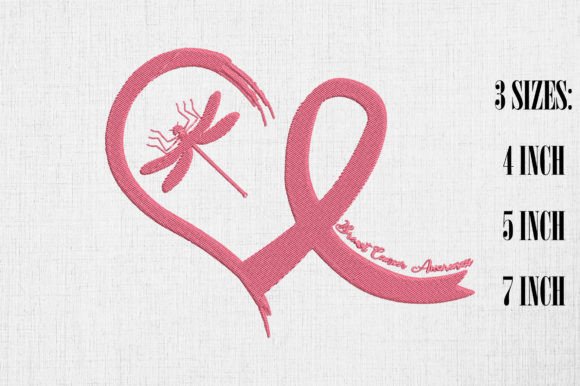
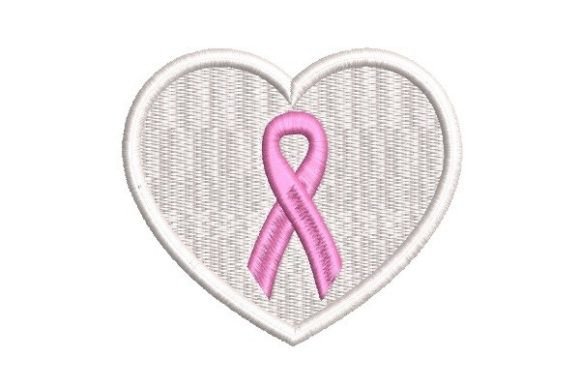
As an embroidery designer who’s developed hundreds of commercial designs for small businesses—from neighborhood bakeries to pet wellness brands—I opened the Cancer Ribbon file with a clear lens: Does this support brand storytelling *and* production reliability? Right away, the design reads as respectful, modern, and intentionally restrained—not overly decorative or sentimental, but quietly confident. It avoids cliché while honoring its Awareness purpose. That balance is rare. For a machine embroidery design, it lands as elegant without being fragile, bold without being aggressive, and scalable without losing emotional resonance. That makes it ideal for small business merch where authenticity and polish must coexist.
Real-World Performance Across Business Applications
The Cancer Ribbon shines in contexts where subtle branding carries weight. On a café apron? It works beautifully at 2.5" wide on the chest—clean lines hold up against cotton twill’s slight texture, and the curve of the ribbon flows naturally with the body. As a woven or embroidered patch on a boutique tote bag? Yes—it reads clearly even when viewed from across a farmers’ market stall. On staff caps? With proper digitizing (which this design appears to have), it maintains legibility on the front panel without excessive stitch density that could stiffen the crown.
For handmade brands selling on Etsy, the Cancer Ribbon adds quiet credibility when stitched onto product packaging accents—think linen drawstring bags for herbal tea blends or custom soap wraps. It also integrates smoothly into larger custom apparel systems: paired with a minimalist shop logo on the left chest, the ribbon becomes a meaningful secondary mark—not competing, but complementing. Florists and pet wellness studios use it thoughtfully on sleeve embroidery for uniforms, reinforcing compassion without overt messaging. And because it’s a singular, symbolic shape—not text-based—it translates cleanly across languages and age groups, supporting broader community engagement.
Where to Use Cancer Ribbon Thoughtfully
Like any strong design, the Cancer Ribbon has boundaries. Avoid placing it below 1.75" on curved surfaces like cap brims or tight sleeve cuffs—subtle tapering in the ribbon ends can blur at tiny scales. On dark uniforms (navy, charcoal, black), confirm thread color contrast: light pinks or heathers may mute unless paired with bright white or silver underlay. High-stitch-density versions (if included in your embroidery file bundle) should be tested on lightweight knits or textured fabrics like burlap—excess density risks puckering or stiffness that undermines the softness the ribbon symbolically represents.
Also, avoid embedding fine interior details—like micro-shading or ultra-thin outlines—if your target use includes frequent washing (e.g., staff aprons or food-service uniforms). Simpler, well-spaced satin stitches hold up longer. If your version includes optional embellishments (beading paths, fill gradients), treat those as premium add-ons—not core elements—for durability-focused applications.
Impact on Brand Identity and Customer Connection
This isn’t just decoration—it’s a trust signal. When customers see the Cancer Ribbon thoughtfully placed on a local florist’s reusable tote or a children’s boutique’s organic cotton onesie, it communicates care, consistency, and intentionality. That elevates perceived value. Unlike generic clipart-style ribbons, a professionally digitized Cancer Ribbon reinforces professionalism—especially when aligned with other design assets like cohesive typography or color palettes. It strengthens visual consistency across touchpoints: same ribbon on a staff apron, same ribbon on a gift tag, same ribbon on a limited-edition tote = unified brand identity.
For handmade product sellers, it adds emotional resonance without sacrificing craft integrity. Buyers don’t just see “awareness”—they sense alignment: a values-driven business that honors depth over decoration. That builds loyalty, especially among mission-conscious shoppers and repeat local customers.
Practical Designer Notes Before You Stitch
- Always test in black and white first. Assess contrast, spacing, and silhouette clarity before committing to thread colors.
- Check minimum viable size. Resize the Cancer Ribbon down to 1.5" and inspect edges—do curves stay smooth? Do corners remain defined?
- Review thread color pairings against your fabric swatches—not screen previews. Pink-on-cream behaves differently than pink-on-charcoal.
- Inspect spacing between ribbon loops. Tight gaps risk nesting or thread breaks during high-speed commercial embroidery runs.
- Confirm hoop size compatibility. If your production uses smaller hoops (e.g., 4” x 4”), ensure the design fits without re-hooping mid-stitch.
- Test on real fabric + stabilizer combo. A cotton poplin apron behaves differently than polyester twill—don’t rely solely on tear-away stabilizer for heavier fabrics.
- Create a printable mockup for client approval—especially for wholesale partners or event merch orders. Visual buy-in prevents costly re-runs.
- Compare beside your existing design assets. Does the Cancer Ribbon share rhythm, weight, and proportion with your logo or other icons?
- Verify commercial licensing. Since this is intended for commercial embroidery and digital embroidery file resale or bundling, confirm usage rights cover your business model—especially for Etsy sellers offering finished goods or editable files.
Final Thought: Purpose Meets Precision
The Cancer Ribbon succeeds because it respects both craft and cause. It doesn’t shout—it invites. It doesn’t decorate—it dignifies. For small business owners building authentic connections through custom apparel, apron embroidery, cap embroidery, or tote bag design, it’s more than a motif. It’s a quiet amplifier of values—one that performs reliably on fabric, resonates emotionally with customers, and strengthens brand identity without compromising on execution. Whether you’re stitching it onto a single staff uniform or scaling it across 500 branded patches, the Cancer Ribbon earns its place—not as filler, but as finish.